La Dolce Vita effect
In psychology, the “La Dolce Vita” effect (literally “The Sweet Life”) describes a fascinating trend: as people enter their senior years, they often become more agreeable, more conscientious, and emotionally stable.
While we often associate aging with decline, this theory suggests a “mellowing out” process where individuals prioritize emotional well-being over social competition.
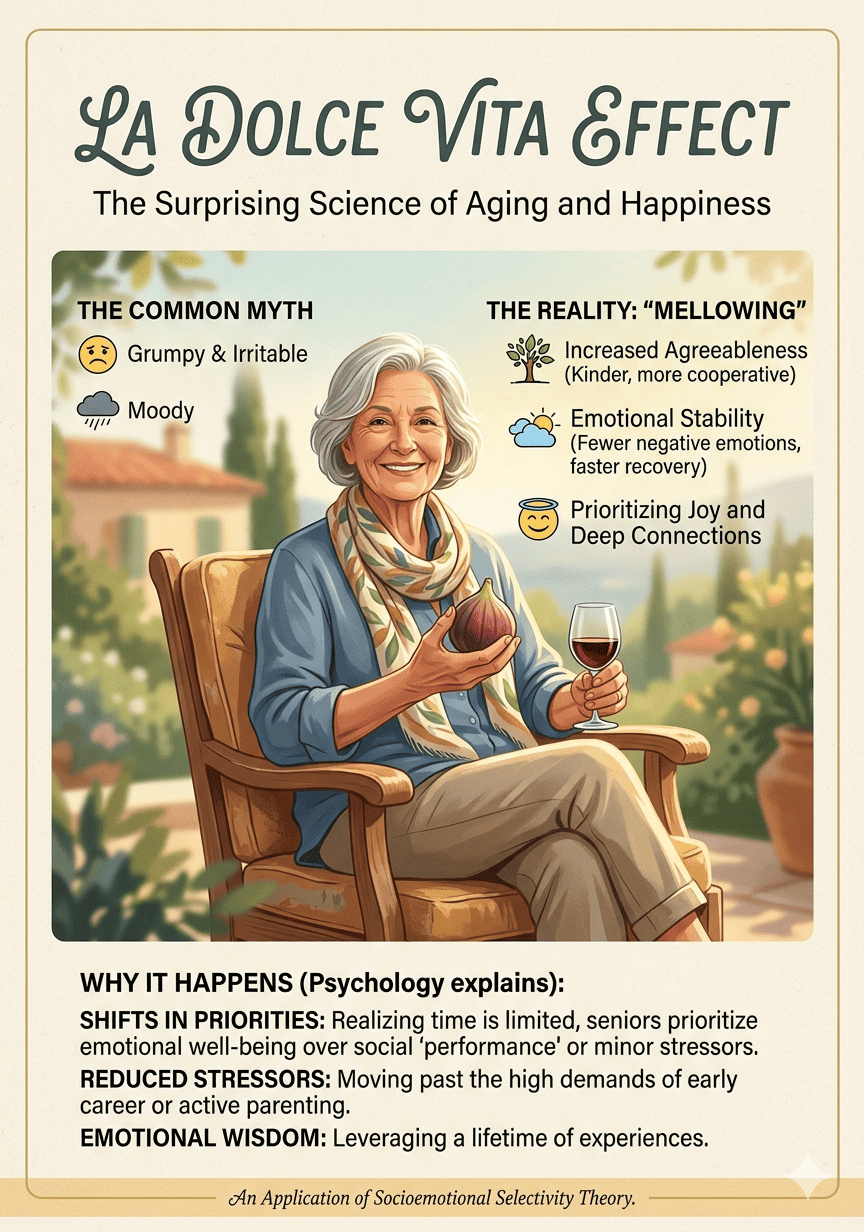
Core Components of the Effect
- Increased Agreeableness: Seniors often become more cooperative, generous, and kind. The “sharp edges” of a competitive youth tend to soften.
- Emotional Stability: Older adults generally report fewer negative emotions (like anger or anxiety) and recover from setbacks more quickly than younger adults.
- Conscientiousness: There is often an increase in being organized and reliable, though this sometimes dips in very late old age (80s+).
Why Does This Happen?
Researchers point to two main drivers for this shift:
- Socioemotional Selectivity Theory: When people perceive their future time as limited, they stop focusing on “info-gathering” or networking for the future. Instead, they focus on the present moment and deepening relationships that bring them immediate joy.
- Role Changes: Retiring from high-stress careers or finishing the demanding years of active parenting removes many of the environmental triggers for irritability and “grumpiness.”
The “Sweet Life” Paradox
Interestingly, this effect exists alongside the physical challenges of aging. Even as health might decline, many older adults report higher levels of subjective well-being than people in their 20s or 30s. They simply get better at ignoring the “noise” and savoring the “sweetness.”
