Class XI Biology: Structural Organisation in Animals
This chapter bridges the gap between the “Animal Kingdom” and “Human Physiology.” It explains how cells group together to form the fabrics (tissues) of the body and how these tissues build the complex machines we call organs.
The Body’s Architecture: Mastering Structural Organisation
An animal isn’t just a bag of cells. It is a highly organized hierarchy. Just as a building is made of bricks, mortar, and wiring, an animal body is constructed from four fundamental tissue types.
In this chapter, we explore the “Big Four” animal tissues and take a deep dive into the anatomy of the Cockroach—a masterpiece of evolutionary survival and the standard model for invertebrate study.
The Core Pillars of Animal Tissue
1. Epithelial Tissue: The Protective Barrier
Epithelium covers the external surfaces and lines internal organs.
- Simple: One layer (Squamous, Cuboidal, Columnar).
- Compound: Multiple layers for protection (Skin).
- Specialized: Ciliated epithelium (to move particles) and Glandular epithelium (for secretion).
2. Connective Tissue: The Body’s Glue
The most abundant tissue. It ranges from liquid (blood) to the hardest substance (bone).
- Loose: Areolar and Adipose (fat storage).
- Dense: Tendons (Muscle to Bone) and Ligaments (Bone to Bone).
- Specialized: Cartilage, Bone, and Blood.
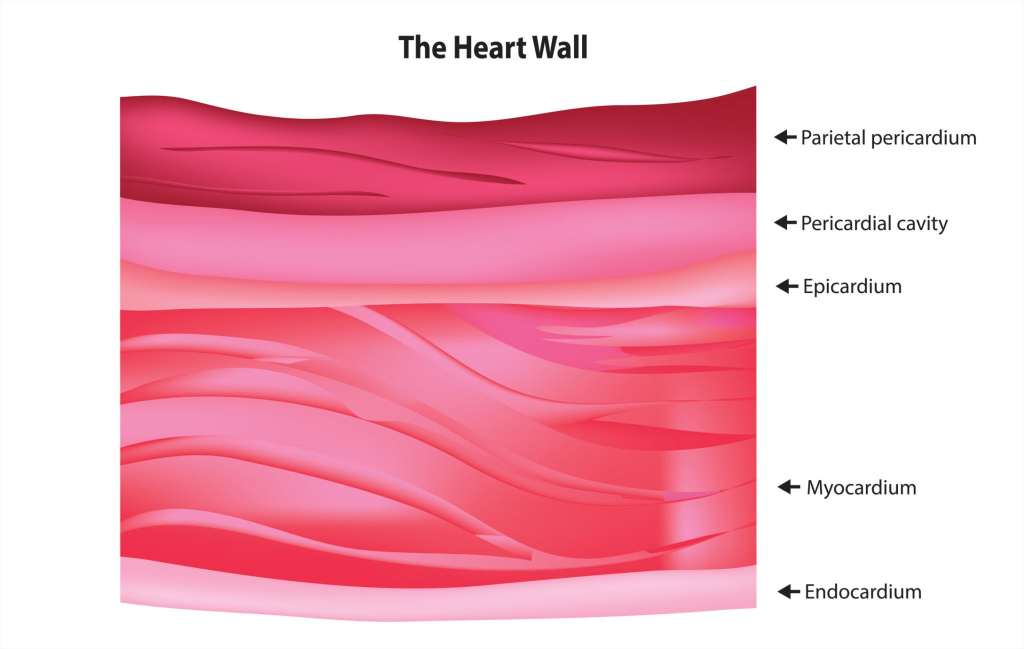
3. Muscular and Neural Tissue
- Muscle: Skeletal (voluntary/striated), Smooth (involuntary/non-striated), and Cardiac (heart).
- Neural: Neurons (excitable cells) and Neuroglia (supporting cells).
Spotlight: Anatomy of the Cockroach (Periplaneta americana)
The cockroach is a dioecious, nocturnal omnivore with a body divided into Head, Thorax, and Abdomen.
- Exoskeleton: Made of chitinous plates called Sclerites.
- Vision: They have compound eyes made of 2000 hexagonal Ommatidia.
- Respiration: A network of Trachea opening through Spiracles.
The Gauntlet: 10 Challenging Aptitude Questions
Question 1: The Diffusion Specialist
Which type of epithelium is found in the walls of blood vessels and air sacs of lungs where filtration or diffusion occurs? Why is its structure suited for this?
Question 2: Fat Storage Logic
Adipose tissue is a type of loose connective tissue. Where is it primarily located in the body, and what is its role beyond just storing fat?
Question 3: Tendon vs. Ligament
A weightlifter suffers a “strain” where a muscle is pulled away from the bone. Which specific connective tissue has likely been damaged? How does this differ from a “sprain”?
Question 4: The Cardiac Junction
Cardiac muscle cells are “coupled” together by specialized structures that allow the heart to contract as a single unit. What are these structures called?
Question 5: The Cockroach Mouthparts
The mouthparts of a cockroach are of the “biting and chewing” type. Name the part that acts as the “upper lip” and the part that acts as the “tongue.”
Question 6: The Gizzard’s Teeth
In the digestive system of a cockroach, the Proventriculus (Gizzard) has a very specific job. What is its internal structure, and what is its function?
Question 7: Malpighian Tubules
Cockroaches are Uricotelic. Name the main excretory organs located at the junction of the midgut and hindgut. How many are usually present?
Question 8: Open Circulatory System
The heart of a cockroach consists of an elongated muscular tube lying along the mid-dorsal line. How many chambers does it have, and what are the funnel-shaped openings called?
Explore
Question 9: Mosaic Vision
Cockroaches see the world through “Mosaic Vision.” How does this affect their sensitivity and resolution compared to human vision?
Question 10: The Brood Pouch
In female cockroaches, the 7th, 8th, and 9th sterna together form a genital pouch. What are the two main parts of this pouch, and what is stored in the Spermathecae?
Detailed Explanations & Solutions
1. Diffusion Specialist
Result: Simple Squamous Epithelium. Its extreme thinness allows for the rapid passage of gases and fluids.
2. Fat Storage
Located mainly beneath the skin.
Result: Beyond storage, it acts as a thermal insulator and a shock absorber for internal organs.
3. Tendon vs. Ligament
Result: Tendons (Muscle-to-Bone). A sprain involves Ligaments (Bone-to-Bone). Both are examples of Dense Regular Connective Tissue.
4. Cardiac Junction
Result: Intercalated Discs (Communication Junctions). They allow waves of depolarization to spread rapidly so the heart beats in sync.
5. Cockroach Mouth
Result: Labrum (Upper Lip) and Hypopharynx (Tongue).
6. The Gizzard
It has an outer layer of thick circular muscles and an inner canal with six highly chitinous plates called teeth.
Result: It is used for grinding food particles.
7. Malpighian Tubules
There are about 100–150 yellow-colored thin filamentous tubules.
Result: They remove nitrogenous waste from the hemolymph in the form of Uric Acid.
8. Cockroach Heart
Result: 13 funnel-shaped chambers. The openings that allow blood (hemolymph) to enter are called Ostia.
9. Mosaic Vision
Mosaic vision provides more sensitivity but less resolution.
Result: This is why cockroaches are so good at detecting the slightest movement in the dark, even if they can’t see “sharp” images.
10. Brood Pouch
The pouch contains a female gonopore, spermathecal pores, and collateral glands.
Result: The Spermathecae store sperm received from the male during copulation.
Pro-Tip: The “Cell Junction” Trio
For exams, remember the three types of junctions in epithelial tissues:
- Tight Junctions: Stop substances from leaking.
- Adhering Junctions: Cement neighboring cells together.
- Gap Junctions: Allow cells to communicate (transfer of ions/molecules).